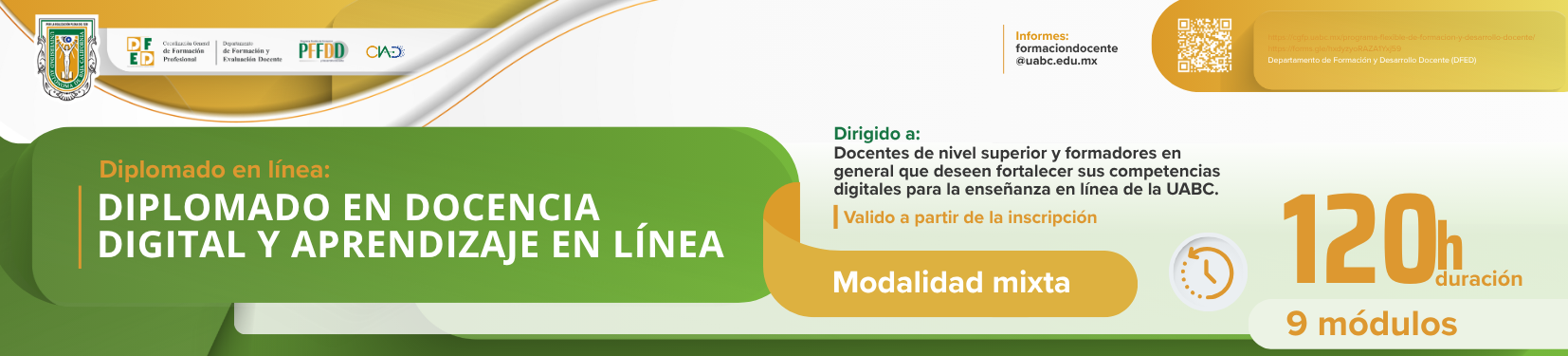
This diploma is designed to strengthen teaching skills in the planning, execution and evaluation of online courses, using technological tools and innovative pedagogical strategies. Through a hands-on, application-oriented approach, participants will explore the use of learning management platforms, the creation of digital teaching materials, effective communication in virtual environments, and instructional design focused on autonomous and meaningful learning.
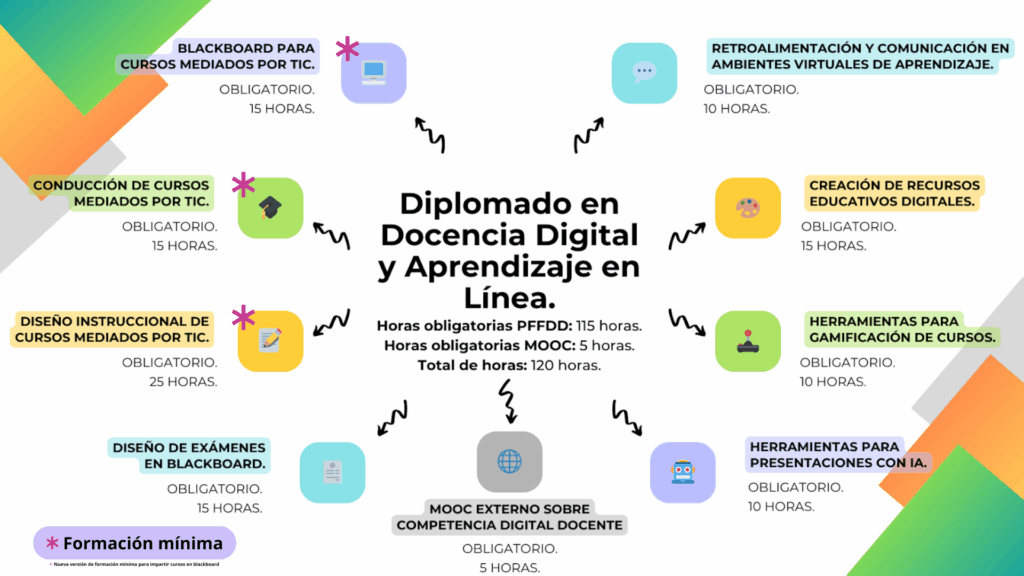
The program responds to the need for flexible and adaptive teaching in the context of higher education, promoting the use of active methodologies that favor student interaction and participation. It is structured in modules that address everything from managing Blackboard and conducting online courses, to implementing gamification strategies and using artificial intelligence to enrich learning experiences.
Upon completion of the diploma, participants will be able to design effective online courses, apply formative assessment strategies and use digital tools to improve communication and feedback in their classes, thus contributing to educational innovation and strengthening teaching in environments digital.
Download the Diploma program
This diploma aims to train teachers in the effective implementation of digital strategies for online teaching, allowing them to design, manage and evaluate virtual courses with an innovative pedagogical approach focused on active learning. Its relevance lies in the growing need to integrate technology into processes
educational to improve accessibility, interaction and personalization of learning. In addition, it responds to current trends in digital education, promoting the use of tools that enhance the teaching and professional development of teachers in various academic contexts.
Participants will develop skills in the management of educational platforms, the development of digital teaching materials, evaluation in virtual environments and effective communication with students. These skills will allow them to improve the quality of their teaching practice, optimizing teaching-learning processes in digital environments in an innovative and sustainable way.
This section describes the strategies and methods that will be used to facilitate learning and teaching. Includes:
1
Teaching Strategies: Diploma instructors will employ varied methods to facilitate learning, including group video conferences, keynote lectures, guided presentations, case analysis, reading review and demonstrations of digital tools. Active participation will be promoted through continuous feedback and scheduled advice.
2
Learning Techniques: Participants will engage in individual and collaborative activities, such as practical work, digital tool application exercises, project development, portfolio development and course design. These techniques will allow the knowledge acquired to be applied, reinforce digital and methodological skills, and demonstrate learning through final products and compliance with performance criteria.
The evaluation of the diploma will be carried out continuously, considering the performance of the participants in each course that comprises it. Each course has specific activities, practices and products that will be evaluated according to the criteria established in its work plans.
Accreditation of the diploma will be granted to those who accredit all of the courses that comprise it, complying with the activities and evidence requested in each of them, in accordance with the criteria of each instructor.
Curriculum Map